
Everyone seems to be anxious about the rapidly rising cost of living right now. I know I am! We can’t control inflation, but we can take control of our household budgets to make sure we are making the best use of our resources and not wasting anything.
Here are some small actions that might help you cope with price hikes. They will only take a short time, but could make a big difference.
1# Write a budget
It’s really important at any time to understand your own finances, but even more so at times like these. Write a budget so that you know what your income and outgoings are on any given month. Set realistic spending targets: so much for groceries, petrol, clothing, etc. Don’t forget to include any one-off planned expenses or annual costs such as car tax.
This is a great foundation to make reductions where you can. You can maybe haggle down some of your bills, switch to a cheaper provider.
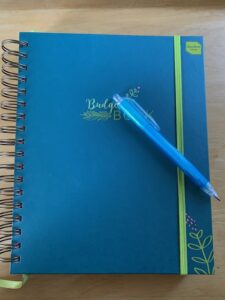
It can be as simple as columns in a notebook, you can use a phone app (many are free) or an Excel spreadsheet, or, as I prefer, you can invest in a proper budget book to help you stay organised. I got this one* from Amazon and it was £12.99 well spent in my view. The important thing is to find a way to budget that works for you.
2# Track your spending
Another reason I like this particular budget book is that it enables me to track my spending easily. I keep my receipts from any in-person spending, then every few days I go through these and also any online purchases.
This way I can see if I am staying within budget for each of my set categories and if I need to rein my spending in. It also reveals any areas where money can leak away with little to show for it, such as on eating out, lunches at work, takeaways and so on.
3# Plan your meals
Meal planning is the number one thing you can do to save money on groceries and prevent waste. Always start with what you have and what needs using first.

If you have lots of soggy looking veg, make soup one of your planned lunches so that you don’t waste it. Check your larder – if you already have five lots of casserole sauce, you probably don’t need to buy more.
Think about your busy days and plan in easy meals for those so that you don’t end up ordering an unplanned for take-away.
Finally, write a shopping list to take with you and try not to be swayed by bargains intended to make you spend more, such as BOGOFs (buy one get one free) and special offers. If they are irresistible, make sure they are actually a good deal. I have found BOGOFs on branded items where it is still cheaper to buy the supermarket own brand, for example.
4# Save energy
Unless you happen to live completely off-grid, the increases in energy prices are inevitably going to affect you. It’s probably not possible to keep your energy bills at 2020 levels, but there are some things you can do to help mitigate them. The main thing, again, is to reduce waste. Turn off lights, only put your heating on when it’s really needed, heat only the hot water you will use, hang your laundry on the line, share bathwater or have a short shower.

It is also worth getting your loft insulated, if it isn’t already. There are fewer grants around to do this in the UK currently, but if you are on benefits, check here (even if you are a tenant).
We found that reflective foil behind radiators was very effective in chucking heat back into the room, and have also fitted polystyrene backed wallpaper in the coldest rooms. Thermal lined curtains, insulating tape around draughty doors and windows and good old fashioned draught excluders are also worth having.
5# Stop spending
I know, I know! Easy to say, but not so easy to do. However, if you seriously want to cope with price hikes that are unavoidable, then curbing your miscellaneous spending on things that aren’t essential is the way to go.
A no spend month is a great way to check your impulses to buy stuff you don’t really need. I have found that having an absolute no spend rule really takes the pressure off. It’s clearer than a vague spend less promise to yourself.

You don’t even need to do it for a whole month; a week at a time can be really helpful. A no spend month makes your more creative with what you have and this tends to spill over into the future. It can change your spending habits for good!
What are you doing to help you cope with price hikes and manage your costs? I would love to hear in the comments.
I’m linking up with this Cass, Emma and Becky in this week’s ‘Frugal Friday’ linky.
*This is my affiliate link. If you click through and make a purchase, I will earn a small commission.

Leave a Reply