

I often mention my Facebook community, My Second Hand & Frugal Life. It’s a lovely, friendly group, so if you want to find and share tips on how to save money, you are welcome to join. Please don’t forget to answer the two membership questions, though, or you won’t get through the front door! As times are tough for many of us – and due to get more difficult over winter – I thought it would be a fortuitous time to share some tips to save money this winter. These have all come from the group members, and will give you a flavour of what you can expect if you join.
Make your heating more efficient
A simple step you can take to keep your home warm and save money this winter is to fit heat reflecting foil behind your radiators. This works by reflecting the heat back into the room rather than letting some of it escape through the wall.
We did this a few years ago, investing in a couple of rolls from B&Q. Checking their website, this stuff now costs around £14 for 2m. However you can use plain kitchen foil.
Angela says, “I bought some foil liners for my radiators a few weeks ago. They are fab! I have had to turn one radiator down to one because it’s so warm. Well worth £21. I lined three full radiators and one small one.”
Heat yourself

You can heat yourself rather than your room by wearing lots of layers or by buying a heated throw*. Many of us have invested in these!
A heated throw is brilliant for those of us who work in front of a computer at home, or older people who don’t move around as much as they used to. I bought my elderly dad one for his birthday and he loves it.
Reduce draughty windows
Anne suggests that cling film on your glass helps stop the draughts coming in and will help you save money this winter. Sue has used bubble wrap to good effect, too. I know it might not look the best, but it’s all about staying warm, so these things are worth a try.
On a similar topic, Nicky recently asked about lining her quite thin curtains to help retain heat. The general consensus was that this was a good idea and there were many ideas for thrifty ways to line them. Suggestions included fleecy blankets from charity shops, old duvet covers, cheap throws, hanging additional curtains behind, using dust sheets or lining them with any sort of fabric you can pick up for free or cheaply. It is definitely worth asking on Freecycle or Freegle.
If you don’t mind the investment, Dunelm sell hook-on thermal linings, which cost £10-20 depending on the size of the curtains you are lining.
Be prepared
Beth asked this question: “Does anyone else feel like a cross between being frugal person and a prepper? With the cost of everything going up, if you can buy extra things when you see them, in the long run you will save money. One thing I stock up on is tinned dog food. The food my dog eats is is £3.00 a can at Morrison’s … I looked around and found it on a deal at Wilko. Six cans for £7.50, so I am stocking up.”
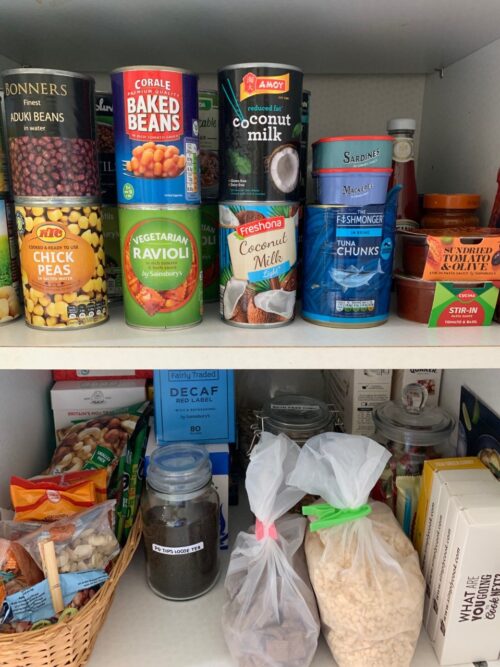
Most of the group don’t approve of creating massive stock piles of supplies generally, but do think it makes sense to buy a few extra shelf stable food items each time you shop. Food is cheaper now than it will be in the future, plus you protect yourself from shortages.
I talked about the types of items it is useful to keep in your stores in this post.
Do you really need it?
Michelle says, “Consider if what you are buying is essential. For example, it’s essential to have clean clothes but, if money is really tight, is it essential to buy fabric conditioner or those fragrance ball things?” Question all of your purchases to see if you really need to buy them. It is possible that you could save yourself some money by leaving them on the shelf.
On the same note, Gem suggests that you shop your house first. “If you think you want something, have a think if there is anything you already own that you could use. Can a piece of furniture be used in a different room for a different purpose?
Shirley, who is in her late 80s (I know this because she is my mum), says that much of the stuff we buy now wasn’t available back in the day anyway, so can’t be considered essential. She says that she never can understand why people waste money on bottled water, as she never heard of anyone dying of tap water poisoning (not in the UK, anyway!).
Cook at home to save money this winter
Debbie says, “Cook at home. Eating out in restaurants and buying takeout food is costly. This seems like a simple thing, but many have never learned to do much of their own cooking.”
Lisa also says to learn to cook from scratch and to incorporate low-cost foods, such as dried pulses, etc into your meals.

In fact, there have been many comments on the value of home cooking in the group and of learning to be creative with what you have. Ren adds, “As we found out in the first big lockdown, it’s amazing what you can make from the contents of the tin cupboard and some imagination!”
On the subject of cooking, Angie suggests you, “Hunt down & treasure 1970’s cookbooks. You’ll need to tart things up a little for modern tastes, but they are great for no-frills, inexpensive recipes. We were all broke back then!”
Avoid using the oven
Also on the subject of cooking, there has been quite a lot of chat about avoiding using your oven, particularly an electric fan oven, if you have an alternative. Certainly, if I have my oven on for any length of time, it shows on my smart meter. There are other pieces of equipment you can use that you may already own but hide neglected in the cupboard. Now is the time to dust off the slow cookers! Other items you may feel will be a worthwhile long-term investment, such as those mentioned below.


Ellie uses her Instant Pot* on the pressure cooker setting and can make a veggie stew in 20 minutes. Many of us use our air fryers. They cook more quickly and therefore save energy, helping you save money this winter.
Some people have invested in Ninja ovens or halogen ovens, which cost less to run than a traditional oven.
I have been using my Wonderbag* – a kind of electricity free slow cooker – as you may have seen on my recent YouTube review video, but others have made their own hayboxes for cooking or used a traditional slow cooker.
Ditch the car
Jack suggests that you, “Consider whether you can walk, rather than getting in the car. This is helpful in so many ways, including keeping the mileage low for resale. If your destination is less than two miles, it’s reasonably easy to walk there and back. For shopping, have a rucksack.”
This is better for the environment too, but not great with several kids in tow! Having said that, my mum used to get four of us and a huge pram on the bus… but would probably say it wasn’t without its stresses.
Track your spending
Gill says to track all your spending. “Write down absolutely everything you buy, as when you see it in black and white it brings home how much you can be spending on ‘treats’”.

Alison agrees that it is helpful to keep a record of every penny you spend. I agree, as I used to do this with a little notebook that I kept in my handbag and it was quite enlightening. Nowadays, I do a weekly audit of my receipts and check all my spending on my bank statement. Then I transfer it to my budget book, so that I can ensure that I am on track and not over spending.
Shop around
Angela says, “Always shop around for your insurance, and take the cheapest comparable quote (ie for the same level of cover) back to your current provider. It’s amazing how often they can match it! Same goes for phone deals, etc.”
I have certainly found this to be the case. Sadly, I don’t think this will work with energy providers at the moment.
Use it up
Jackie’s suggestion is: “Use stuff up to the very end. We all know about reducing our use of plastics, but at this time of year (Christmas) I’m sure some of us will receive body lotions, etc. in plastic bottles. When they seem empty, turn them upside down for a while. Then with sharp scissors or a knife (carefully) cut across the bottle about a third up from the top. The amount of product left inside is amazing!
“Use fingers or a spatula to get what you need, then slide the bottom of the bottle back down over the top bit to keep what’s left fresh. I can get another couple of weeks’ worth doing this! Then rinse and recycle as usual.”
Ren agrees, but also says that one of her biggest savings has been switching to bar soaps and shampoos. These, she feels, are good for the environment and her bank balance.
Buy second hand
Seeing as it’s a group called My Second Hand & Frugal Life, we all buy second hand as much as possible, and people love showing off their finds.
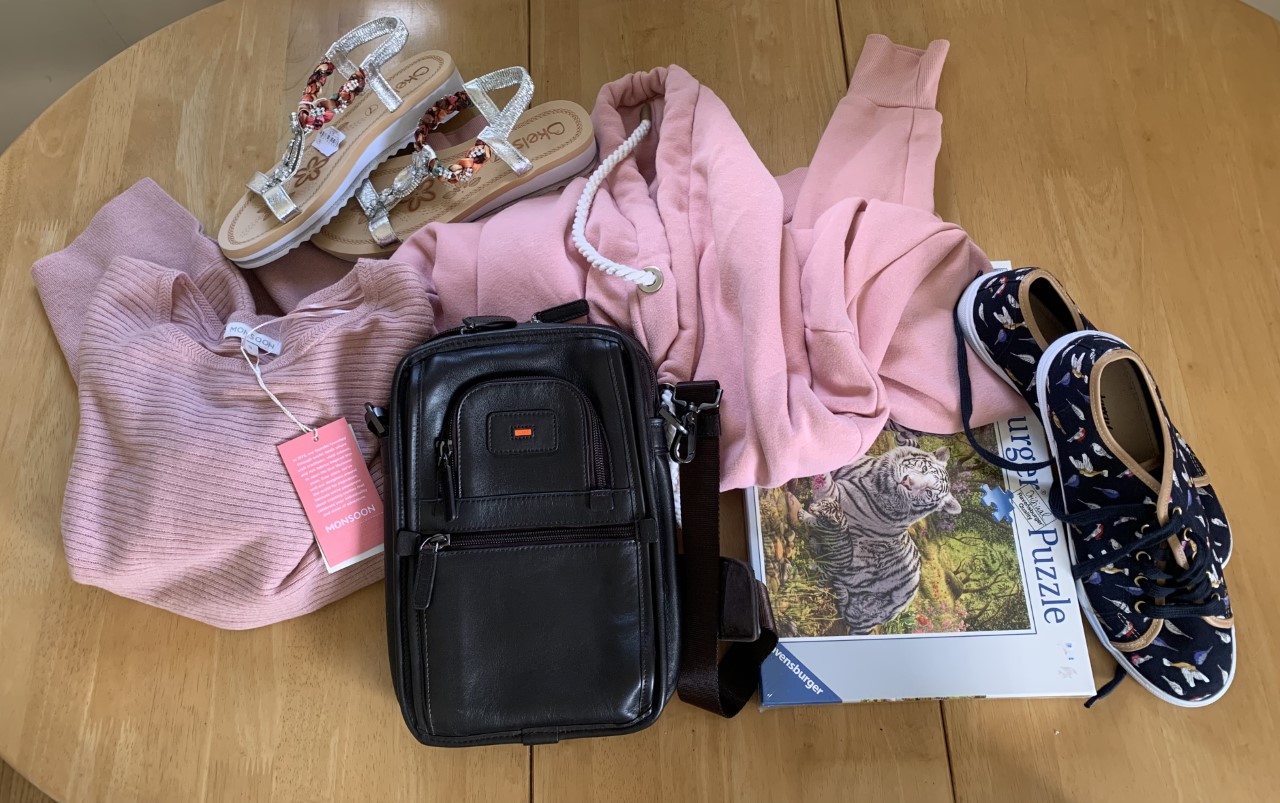
Once you get into the habit of finding suitable preloved bargains, it’s hard to pay full price! I have a post about buying second hand clothing here.
Reduced and free food
A lot of people on the group use Olio to get free food that might otherwise go to waste. One of our moderators, Lisa, has shared some great hauls recently. There are always a lot of baked items, but she also picked up three heads of broccoli, some salad and bananas on one occasion.
Members love to show off their yellow sticker food hauls. They know just when to go to get the best reductions, then freeze or preserve their finds so that they don’t spoil before they are used.
Come join us!
These are just a reflection of some of the conversations we have. If you want to join in and save money this winter, you will be very welcome. See you there!
This post contains affiliate links, marked with *. If you click through and make a purchase, I will earn a small commission to help support this website.

Shelagh Tillott says
Lots of good ideas here Jane! And instead of using expensive fabric softeners, just add a cup of white vinegar to the rinse. It works just as well and doesn’t leave a buildup on fabrics and towels.
shoestringjane@outlook.com says
It does, although I have even stopped using that now. No one has noticed …
Anonymous says
Moving down a brand has long been suggested in frugal circles but this is becoming harder. I used to buy Morrisons Savers laundry detergent at £1.50. Instead of increasing the price they have withdrawn it altogether and the cheapest is now almost double the cost. They also appear to be doing the same with the cheap washing up liquid as the shelf is empty and the next price up is more than double. Tescos has removed several of its cheapest lines so moving down a brand isn’t possible as they force us in the other direction.
shoestringjane@outlook.com says
Lidl and Aldi still offer cheap lines, so worth checking out if you are near one. Home Bargains is good too
Karen says
I have never used fabric softener as I don’t like my clothes smelling of anything other than my perfume
shoestringjane@outlook.com says
Some of the smells are overwhelming. I’m not bothered either!
The bridesmaid says
Heated throws, hot water bottles, extra clothes are all important but this doesn’t help the temperature of the air you’re breathing on. Elderly people and the very young are prone to respiratory problems caused by breathing in cold air. Furthermore, a house needs to be heated to avoid damp and mould spores forming which are even worse