
This post contains affiliate links, marked with *. If you click through and make a purchase, I will earn a small commission.
We live in a toxic world. According to a recent article in the Guardian, “Synthetic chemicals are in nearly everything we touch and consume. But some chemicals can be potentially harmful and a number of experts are anxious about possible long-term health effects of our everyday exposure.” Sounds terrifying! So what can you do about it, and how can you reduce the chemicals in your home?
Although the chemicals in cleaners, personal care products, our food and even our furniture may have been tested individually, no one has tested their possible hazards to our health when they are mixed together.
Personally, I find I am very sensitive to a lot of chemicals. For example, although I am not officially an asthmatic, plug in air fresheners make me wheeze! The very last thing they do is freshen the air around you. They simply mask unpleasant smells.
The last time I tried an oven cleaner, it had a similar effect, making my chest feel tight and giving me a headache.
I am on a mission to create a healthier environment here at Shoestring Cottage and have been looking at ways to reduce the chemicals we live with. So, how can you reduce the chemicals in your home and why should you?
Reduce the chemicals in your home when cleaning
Mrs Hinch I ain’t! I definitely do not strive to use so many products and cleaners at home that I create a nasty chemical cocktail.
In my view, we can be clean without using several individual products for each room in the house. That’s an invention of the marketeers. They want us to buy as many different cleaners as possible in order to justify their existence.

We seem to be obsessed with killing germs. This is sometimes useful, like when someone in the house has a bout of winter vomiting virus and you want to try to curb its spread with some serious disinfecting.
However, day to day, I don’t believe we need to kill every tiny organism we live with. Some of them are actually beneficial to our health and we do have an immune system for a reason.
“Without exposure to microorganisms, we would not develop the part of our immune system that responds quickly to microbes that cause disease.” – Janet Black, Living in Our Toxic World
There is an easy win if you want to reduce the chemicals in your home. Change the way you clean and change your thinking around the idea that you have to wipe out every last microorganism sharing your environment. You will also save money.

I use natural products to clean the house these days. White vinegar is a staple, as are soda crystals and bicarbonate of soda. They can be used to clean pretty much everything. The Dri-Pak website is a mine of useful information on natural cleaning.
There are also many great books on the subject. I like Natural Household Cleaning: Making Your Own Eco-Savvy Cleaning Products by Rachelle Strauss*.
I also make my own easy lemon spray cleaner – the recipe can be found here.
Food
There are pesticide residues in many of the foods we commonly eat. Fruit, vegetables, milk and other foods like grains have all been found to contain them.
If you are on a budget, buying all organic products is probably impossible – it certainly is for me. I buy some organic foods if I see them at a reasonable price on my travels. For example, I recently bought organic bananas and carrots in Lidl.

To reduce your exposure to pesticides in fruit and vegetables, wash them thoroughly. However, this may not remove all of the pesticide residue. This article suggests that soaking in a solution of bicarbonate of soda can be effective, and I have also read that you can do the same with a 10% solution of vinegar with water.
Peeling some of your fresh produce will also get rid of some of the residue, but it’s not suitable for everything. You won’t want to peel or soak soft fruit, for example.
Fruits figure highly on a list of the best and worst foods for pesticide residues on the Pesticide Action Network UK website here, which might help you to decide what items to buy organic whenever possible.
If you can grow some of your own food organically, as we try to, you will also decrease your pesticide intake.
However, it’s not just the chemicals in our food that we need to be wary of. They also figure in the plastic packaging that is so difficult to avoid. It also contains BPA and phthalates (see below) so aim to avoid that as much as possible.
Personal care
Most women, and a lot of men too nowadays, use an assortment of products every single day. But are they all safe to use over a long period of time?
 Things like nail polish, hair sprays, shampoos and perfumes all contain phthalates, which have been linked to hormone issues such as miscarriages. Along with BPA, which has been associated with increased blood pressure, and issues with female reproductive development, they are in a lot of packaging too.
As well as these two nasties, parabens is commonly found in personal care products, which is another hormone disruptor. Sodium lauryl sulfate is what makes things froth, and is in shampoos, but actually strips your skin and hair of its natural moisure.
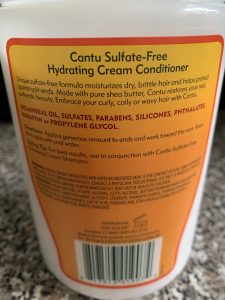
It’s not impossible to find more natural products. Even places like Superdrug and Boots sell shampoos and conditioners without sufates and parabens these days. I bought this Cantu conditioner the other day to try. Of course, it still has a list of ingredients that are perplexing!


Lucy also has a whole book on the subject – Happy Hair – The definitive guide to giving up shampoo: Save money, ditch the toxins and release your hair’s natural beauty with No Poo
This article from Cancer Active will tell you most of what you need to know about the chemicals found in personal care products and how to avoid them.
Another one to avoid in both toiletries and cleaning products is anything labelled parfum or fragrance. Cancer Active says, “Fragrances have been linked to allergies and breathing difficulties and they penetrate the skin. The ingredients do not legally have to be declared. Avoid all skin contact with fragrances.”
Your home is your safe haven?
What about inside your home? Most upholstered furniture like sofas contain flame retardants. According to Janet Black in her book Living in Our Toxic World: Protect yourself and your family from environmental toxins and reduce your risk of cancer and chronic disease*, “85% of sofa cushions contain toxic or untested flame retardants … 41% of them contain chlorinated Tris, a carcinogen that was banned for use in baby pyjamas in the 1970’s”.


Mattresses are another household item full of potentially carcinogenic chemicals – worrying when you consider how much time we spend lying on them.
Carpets are even worse. Black says that synthetic carpeting, “emit toxic gases and can cause headaches, asthma, allergic reactions and dizziness.” She suggests going for natural fibres like jute, sisal or wool instead, or even hard wood or tile flooring.
Now that I have frightened the life out of you (and myself), it would be easy to hide your head in the sand and carry on regardless. But even if you make just a few changes to reduce the number of chemicals in your life you are taking a positive step in the right direction.
I feel I have a lot to learn and a way to go before I am happy with how many chemicals we are exposed to at Shoestring Cottage. However, learning as much as possible and increasing your awareness of the issue can help you to reduce the chemicals in your home.

Leave a Reply