
This is a guest post by Mary Elizabeth, the founder of MeMoreMoney.com. Here she explains how to make budgeting easier to help you get your finances on track.
Have you tried budgeting before, only to give up on it within the first couple of weeks?
Maybe you started a budget and lost motivation after not being able to stick to it? You might have even tried budgeting and decided you didn’t feel the need to track your expenses because you’ve got this money thing figured out.
I enjoy working out what is going well and where I need to adjust. For me, budgeting has become less stressful as I set my spending priorities.
If you haven’t created a budget yet, I’d certainly recommend it. Having all of your expenses laid out in one place makes it easier to know where you stand with your money.
If I didn’t use a budget, I’m sure we wouldn’t save as much money. Just acknowledging each expense makes me want to spend less.
In this article I will go through some steps I have taken to make budgeting easier and less time-consuming.
Record Your Expenses Every Night to Make Budgeting Easier
Committing to putting in your costs daily will help you be more aware of your spending habits. At the end of each day, take a few minutes and jot down where you spent your money.

You can use a simple budget template on Excel or Google Sheets. These are free so you won’t have to pay for budgeting software.
If you don’t buy anything on a particular day, you don’t have to do anything! I also update my budget with any additional income the day that I receive it.
Doing my numbers every night has been the easiest way for me to keep our budget accurate. If I go a week without updating the budget, it’s a lot harder to know what transactions on my credit cards have been added to the budget and which haven’t.
Usually, I only make a couple of purchases each day, so there’s barely anything to add to the budget each night. And once you get in the habit, it’s easier than you think.
Use a Simple Budget
My favourite budget is the 50/30/20 budget because it is easy to follow. It also gives me some leeway in my spending.
When your budget is too complicated to update each day easily, you’re more likely to forget or be unrealistic about your spending. I just want to know how much money we have leftover for that month to help me plan, rather than spending a set amount in each category.
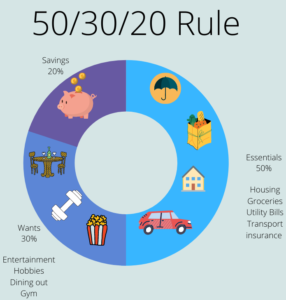
The 50/30/20 budget structure has worked well for me! It uses the following simple rules::
- 50% of your income goes towards necessities like food, clothing, toiletries, housing. These are the things you cannot live without.
- 30% is dedicated to your wants (yes, you still budget for fun!). Include things like meals out and gym memberships in this pot; the things that make you happy.
- The final 20% goes towards savings. Make sure you use the ‘pay yourself first’ mentality and set this up like a bill, so the saving has started as soon as you get paid.
Be Flexible With The Money in Each Category
Instead of setting a fixed amount for each of our budget categories, I set estimates and update them depending on how much we spend. Since I never know how much money I’ll make with my side hustles, I have to update my budget whenever I have the information.
Not worrying about going over the exact amount for each category in your budget may seem odd to you. You have probably been thinking that the whole point of a budget was setting restrictions on your spending. I don’t look at budgets this way.
For example, if we spend more money on eating out than I had put in the budget, I lower the amount I had for another category and raise the eating out category.

I don’t worry about how much is set for each category because our overall goal is to save and invest as much of our money as possible. If we spend more money than anticipated, we do so consciously and for a good reason.
A budget should only be used as part of your overall financial plan. If you’re budgeting because you can’t control your spending, you probably won’t do it for very long. My big picture goal is to become a millionaire and choose when and what I work on.
A budget is just a tool I use each month to stay on top of all the moving wheels to get me to that big picture goal. Since the quickest way to get to my goal is to increase income and decrease spending as much as possible, I’d be doing that even if we didn’t use a budget.
Use Rounding Up Apps
Did you know technology can help you budget and save money for free? Since the birth of digital banking building, creating a saving habit has become a whole lot easier! There are many applications now that will round up your spare change every time you spend money.
If you go to the store and spend £15.60, an app will round up that purchase to £16. Those pennies are then redirected into a savings account or space, so it’s easy for you to save money without feeling like you’re missing out on anything.
Make Sure Your Budget is Realistic and Achievable
Your goals must be achievable to start with, or inevitably you will find it frustrating. If you find spending on a budget too difficult, it’s okay to give yourself some room for error.
If this is the case, then have a separate account that you save into without worrying about how much money you spend there, or your 50/30/20 budget might need to be 50/40/10 at first.
Try not to compare yourself with others. Your budget needs to reflect your lifestyle and work for you.
What’s The Point Of Budgeting This Way?
Even though I don’t necessarily use our budget as a way to restrict our spending habits, I still find tremendous utility in budgeting. Here’s my process for budgeting and what I get out of it:
Wiping the slate clean
- At the start of the month, I wipe the slate clean for income except for my guaranteed salary.
- When I start a new month in the 50/30/20 spreadsheet, I carry over the budget amounts for the last month. I keep the amounts the same in categories like groceries, eating out, and transportation. These don’t vary much from month to month.
- I have a miscellaneous spending category for any expense we aren’t expecting for the month. I usually set this to a couple of hundred pounds at the beginning of each month and hope we don’t go over it.
- As the month goes on, I update our income to reflect how much we make.
- If we’re earning more than we’ve spent, I put any excess income in a savings category.
What do do when we over spend
- If we spend more money than I had set in any of the categories, I update the category to the amount we spent. When this happens, I have to either lower the amount we’re going to save for the month or sometimes pay less than I had set for a category. We can reduce that category to make up for the category we went over on.
- Because I update our budget in real-time, I can make sure every extra pound we make is spent or sent to savings/investing. This is called zero-based budgeting.
- I make a separate savings category for my side hustles because I keep that money in a different bank account. Here I enter how much income I made for the month with the side hustles.
- At the end of the month, I can see how we did in each category compared to the last month and decide if there are any changes we need to make. I can also evaluate our recurring bills. This is when I make notes if I need to compare and haggle the prices down on things like insurance.
The process I just laid out might seem complicated to you, but it’s super simple for me.
I keep a budget to know exactly how much money we made, how much we spent and how much we saved. Since I’m doing the numbers every night, this whole process takes me only an hour or two every month.
How To Make Budgeting Easier: Final Thoughts
Budgeting is the process of setting limits with money so that you can live within your means. It’s not about trying to control spending or save every penny. It’s just an exercise in figuring out the best way for YOU and YOUR family to spend your hard-earned cash and still have enough leftover at the end of each month.
Budgeting might seem complicated if all you know how to do is compare two numbers on paper. However, when you see how easy this budgeting method really is, I think you’ll be pleasantly surprised!
Do you have any other tips that help you budget easily? Let me know in the comments below!
If you enjoyed this post, you might like Embrace Frugal Living to Pay off Debt and Twenty purchases to save money.
About the author:


Leave a Reply