
This blog is all about living your best life and reducing waste wherever you can. We’re all about frugality and sustainability. We abhor the excessive consumption of single use plastics as much as we abhor the waste of food in an era where so many go hungry. However, there’s another form of waste which we should all be aware of and that’s wasting money. And the sad truth is that many of us are unfortunately adept at this activity. That’s not an admonition. It’s a natural consequence of living in a culture that treats shopping as a lifestyle activity.
All too often we pack ourselves into busy shopping centres on a Saturday afternoon rather than take a long stroll in the park, see a National Trust heritage site or visit a museum or gallery. In a capitalist society we’ve been conditioned to believe that our free time should be spent, well, consuming. The net result is that we come home with bags and bags of stuff which we may seem completely enamoured with but will, after a while, simply become more clutter. It’s okay to admit it, we all find ourselves buying things that wind up being a waste of money with little real benefit to our homes, our own wellbeing or the welfare of our planet.

That is not, however, to say that frugality means never buying anything. It simply means weighing the relative benefits of every potential purchase carefully and suppressing that little voice that pushes us to impulse buy. There are, however, some things which are always a good investment for you, for your home and for the planet. Purchases which are neither impulsive nor frivolous but can bring more benefits than a handful of magic beans. These include…
Reusable anything
Each of us can do a huge amount to offset the damage we do to our land and our oceans by saying “no more” to non-recyclable single use plastics. These are one of the biggest ecological problems we face and yet it’s one of the easiest things to do something about. If we keep on using them at the rate we do, experts predict that there will be more plastic than fish in the ocean by 2050. When these plastics get into our seas they leach harmful chemical compounds which can prove fatal to plants, fish and birdlife as well as sea mammals like whales.
Thus, anything reusable (and non-plastic) is an inexpensive but extremely beneficial investment for you and your household. These can save you a few pence every day which add up to a substantial amount by the end of the year… But the savings they will make to the world around you can be incalculable, especially when others see your example and learn the impact that such a simple consumer choice can have on our planet.
Great reusable items for any household include;
- Lunch boxes
- Reusable cutlery like knives, forks and sporks
- Stainless steel straws
- Shopping / grocery bags
- A long-lasting toothbrush with detachable heads
- Reusable sanitary napkins (these can save you an absolute fortune and help rid our seas of nasty chemicals)
- Reusable nappies (as above)
- Water bottles (there are untold billions of plastic beverage bottles in our oceans right now).
- Rechargeable batteries
- Reusable coffee filters
- Loose tea infusers (no more clogging our oceans with tea bags)
As you can see there are a plethora of ways in which you can rid your life of disposable products. None of them represents a big investment in terms of monetary cost, but they can all help to make a tangible difference if we all commit to buying and using them.
Education
There is no purchase that offers greater value for money than education and learning. It doesn’t matter if you’re investing in that online business masters degree that will help you to start your own business or smash through the glass ceiling over your career, or simply filling your shelf with useful books that will teach you new life skills. Knowledge and skills are never a bad investment, whether you’re learning the skills which will help you to lead a more self-sufficient life less dependent on consumer products or pursuing the qualifications which will propel you towards career success.
One of the main reasons Jeremy Corbyn has become popular, especially with younger voters, is his proposal of a National Education Service which will do for learning what the NHS does for medical care, making it free for all UK citizens. Until such a service is introduced, however, education will always be something that’s well worth paying for.
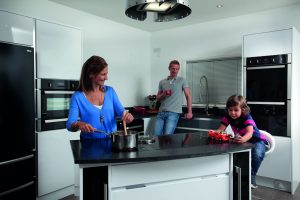
Cookery books (so long as you actually use the recipes)
Speaking of investing in new skills, learning new recipes and cooking styles can help you to fall in love with home cooked food again and reducing your reliance on restaurants and takeaways. In the Deliveroo / Just Eat age temptation is harder than ever to avoid. The delicious food from the fast food outlets and restaurants we love is never more than a few minutes away. However, while the odd take away or meal out is a great occasional treat, if you find yourself getting take away rather than cooking this can become an extremely expensive habit.
Instead, invest in cook books and take the time to learn and use the recipes. This will slowly but surely make you realise that you don’t need to pay takeaway or restaurant prices for delicious food. That’s good news for your bank balance and, because you’re exerting more control over the nutritional content of the food you eat, it’s also good news for your waistline.
Energy saving apparatus
In an age where our homes are increasingly reliant on more and more electronic devices, the average household is a real energy vampire. That’s bad news for the planet. While energy providers are working to operate in more sustainable ways, anything we can do to reduce our energy consumption is beneficial for our planet. Needless to say, it can also result in long term sustained savings, leaving you with less money spent on energy to add to your savings or put towards the occasional indulgence.
There are lots of ways in which we can outfit our homes with the apparatus to do this and, while some methods are more expensive than others, any of them is a great investment for your home. Some great energy / water saving solutions for the home include:
- Attic and cavity wall insulation (use cellulose insulation for added eco-friendliness. This is made largely from recycled newspapers).
- A low flow showerhead that can reduce your water usage by as much as 50% and potentially save you over £100 every year. Remember to keep your showers under 4 mins in length for added water conservation.
- Thermally broken windows. Not all double glazed windows are created equal and not all offer the same level of insulation and energy efficiency. Thermally broken windows are a great investment which will keep your home warm in winter and cool in summer while preventing heat from disappearing through your windows.
- CFL bulbs- Most of us have know idea how much energy we’re wasting when our home is full of incandescent bulbs. 90% of the energy used by these bulbs is wasted in heating the filament while only 10% of it translates into useful light. Switch to energy efficient CFL bulbs for years of savings.
The frugal life is about saving money not by eschewing purchases, but by making the right purchases. By investing your money in places where it can work harder for you, you can enjoy a happier, healthier and more sustainable lifestyle!
This is a collaborative post.

Jo says
Hi Jane,
This is what I read when I googled ‘Plastic waste which countries’.
‘China, Indonesia, Philippines, Thailand, and Vietnam are dumping more plastic into oceans than the rest of the world combined , according to a 2017 report by Ocean Conservancy.’
I completely agree we should all do our bit, and I have a stainless steel water bottle, lunch box and buy secondhand too. But I think much of this plastic problem is caused by some countries with extremely lax environmental laws – although ours could always be better!
Still agree we should change our ways, though. Especially where you mentioned how we’re treated as consumers, not just citizens. By the way, have you seen the book The Art of Frugal Hedonism? I can’t remember the authors but it’s fantastic. I really enjoyed it. Making, feeling, thinking, enjoying and doing beat buying in their world (although secondhand buying is thought of highly I’m pleased to say).
shoestringjane@outlook.com says
That book sounds right up my street! Will check it out. As for the issues with plastic in Asia. I have also read that rich western countries export waste to be ‘recycled ‘ to them and it just gets dumped. A friend’s daughter is in Vietnam and she says they have started to clean up as they can see the terrible problem in the waters around them. It’s a complex issue
Jo says
Hi Jane,
Hmmm…it wouldn’t surprise me that some Western countries are dumping waste. And here in Australia we have the worst packaging – greeting cards shrouded in plastic, sticky tape in plastic moulded packets….I’m waiting for the day when we have special banana shaped plastic packaging for each individual banana. So our laws could be much better, too.
Yes, the Art of Frugal Hedonism is fun and clever! Puts things in perspective, too. And much of consumption is about perspective, I think.
Sam says
In terms of cookery books I often get these out of the library. If there are lots of recipes that I like then I may buy it, otherwise I will just take photos of the ones that I like and save them on my computer to look at when I want to cook the meal.