

Maintaining and looking after your possessions, be they household appliances, furniture, carpets, vehicles or bicycles will keep them looking good and enable them to remain usable for longer. In this post I will be looking at how to make things last longer, so read on for my suggestions.
If you want to save money and reduce the waste your household produces, it is a good idea to make things last longer. We all know that many products are made so-called built in obsolescence nowadays, but with a little care and attention you can beat the manufacturers, who are only worried about their profits, and save yourself some money in the process.

Because many household appliances and other items are relatively cheap these days, we appear to have lost the will to make things last longer. Many of us will send things to the tip with little thought rather than attempting to repair them. It is sadly the case that it is often cheaper to throw something away and replace it rather than get it mended, so it is in the interest of our wallets and the planet to stop our belongings needing repair in the first place if we can.
Here are just some household items that you can extend the life of.
My ideas to make things last longer
Hairdryers
If you use your hairdryer on full power every time, you will be lucky if it lasts a year. I get four to five years of use from mine, used every other day, by using the lower power option.
I also check the length of the manufacturer guarantee when I purchase a new hairdryer. Many offer just a year’s guarantee, but you can find models with two or, preferably, three years on them.
Razors

If you wash and dry your razor after each use, you will need to replace the blades far less often. You can also make the plastic disposable ones last longer this way. Obviously a reusable, such as this Bambau one*, is preferable if you want to save the most money and reduce waste.
Refrigerators
Vacuum or dust the compressor coils at the back of your fridge every few months. The compressor is an expensive part to replace and if it is clean it doesn’t have to work as hard to dissipate the heat from your appliance.
Towels, clothing and bed linen

The less often you wash things, the longer they will last. Line dry rather than tumble dry if possible. This is better for the fabric and will save on energy too. Consider dying faded towels and linen rather than replacing them.
Spectacles and sunglasses
If the arms fall off an expensive pair of specs, your optician will usually fix them for free. I have found this to be the case even if I didn’t purchase them from them in the first place.
Gas boilers
Keeping your gas boiler running optimally will make it more efficient, keep you safe from gas leaks and keep it running well for many years. It is a worthwhile investment to get your boiler serviced regularly

Microwaves
I have learned the hard way that if you shut your microwave door when it is full of condensation, the inside will begin to rust. This makes your microwave unsafe. After each use, wipe down the interior of your microwave and leave the door ajar for five minutes or so.
Washing machines
Make sure you clean the filter on your washing machine regularly. Clean the detergent drawer every few weeks with a bottle brush and some white vinegar. Rub around the drum and make sure you clean around the rubber door seal thoroughly. Use some washing up liquid if the dirt doesn’t come off easily.
Run the machine without a load once a month with 500g of soda crystals, which can be bought in bulk on Amazon*. This will clean the machine and prevent limescale build up. If you live in a very hard water area, use 250g of citric acid every other month to keep your machine clean, free of limescale and prevent bad smells developing.
Dishwashers

Clean the doors and rim of your dishwasher with white vinegar or liquid soda crystals and hot water. Empty and wash the filter and check that there is nothing caught in the well of the filter.
Dri-pak, who manufacture soda crystals, do not recommend that you clean this appliance with them in the way you would your washing machine. Instead, they suggest dissolving two tablespoons of citric acid in two bowls and placing one on the top shelf and one on the bottom shelf of your machine. Then, run an intensive cycle.
Tumble dryers
Personally, I don’t own a tumble dryer. It’s more economical and eco friendly to line dry washing. However, if you have a house full or people in the depths of winter, I can understand why a tumble dryer would be preferable to clothes horses constantly full of wet laundry.
According to Which, the best ways to keep your tumble dryer running well are as follows: Clean the lint filter after every use; If you have a condenser dryer, empty the tank after each use; Clean the heat exchanger on your machine regularly. A build up of dust and fibres slows the flow of air and makes the tumble dryer less efficient; Regularly clean the inside of the drum and the drying sensor.
Carpets
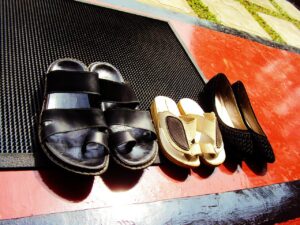
The best way to keep your carpets looking new is to keep the dirt outside. Have a policy to remove shoes in the hallway. Keep a towel by the door to clean and dry the dog’s paws too.
Vacuum regularly, and deal with stains immediately, before they have time to sink into the carpet fibres.
If a section of your carpet becomes damaged, replace just that piece if you have to. There are some good tutorials on YouTube showing you how to repair or replace small areas of your carpet.
Fix your appliances and buy quality
As I mentioned before, I find it depressing that it is often as cheap to buy a new appliance like a washing machine than it is to repair an old one. But if you purchase a quality machine initially, it will definitely be worth it, save money in the long run and is good for the planet too.
These are just some ideas for how to make things last longer. I would love it if you shared yours in the comments.
This post contains affiliate links marked with *. If you click through and make a purchase, I will earn a small commission but it won’t cost you any more.

Julia says
A timely post as apparently there’s a Right to Repair law coming out this summer that says manufacturers need to make parts easily available to consumers!
To be honest, I thought most people called for a repair first anyway, and only then chucked if deemed unrepairable – but seeing some of the virtually new things you find, perhaps not!
DH always watches the repair closely so if it goes wrong again he can do it himself the next time. Our frost-free fridge freezer (9 years old) has a tendency to ice up once a year which then stops the motor from circulating the cold air from the freezer into the fridge section, but after seeing how simple it was to take off the inside panel and de-ice it, we’ve been doing it ever since!
I bought a cheap fold-up duel voltage hairdryer at least 20 years ago in America for a trip home. Despite having a crack in the main blowing section and needing a US-UK adaptor, it’s still going strong!
My mum still has the one she bought in the 1960s, that I used to use in the 1980s! 😀
shoestringjane@outlook.com says
They don’t build stuff to last or be repaired on purpose, so I love the right to repair law idea! Didn’t know about that